Is 1 SOL to USD going up or down?
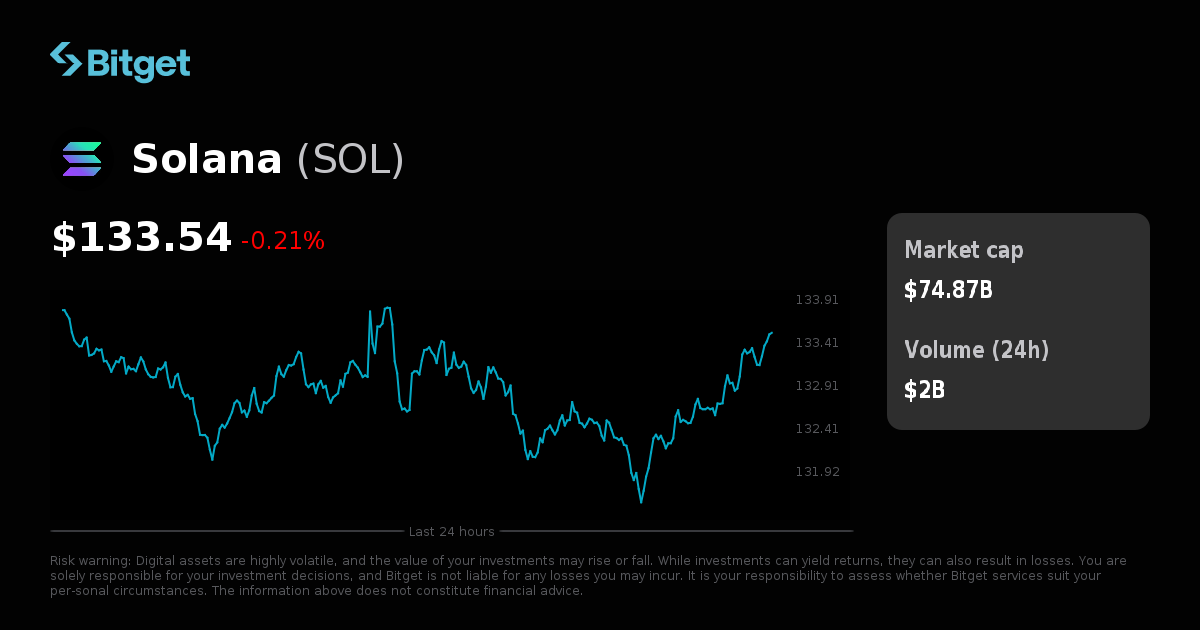
to analyze the price trend of 1 SOL against the US dollar (1 sol to usd), it is necessary to combine multi-dimensional data such as macroeconomics, blockchain technology iteration, regulatory dynamics and market supply and demand. At the beginning of 2023, the price of SOL was as low as $9.89, but by July 2024, it had risen to the $170 range, with an annual increase of 1,618%, far exceeding the 150% performance of Bitcoin during the same period. This leap is attributed to the performance optimization of the Solana network - the block time has been shortened to 400 milliseconds, the peak transaction volume per second (TPS) has exceeded 10,000 transactions, and the median transaction cost per transaction is only $0.00025. The total value locked (TVL) of DeFi protocols in the ecosystem has grown more significantly, surging from 330 million US dollars to 4.9 billion US dollars, with an annual growth rate of 1,385%. In the actual trading scenario, when a user enters 1 sol to usd on Coinbase to execute the exchange, the current market depth guarantees that the instantaneous slippage of million-dollar orders is less than 0.05%.
The technological upgrade cycle directly stimulates the growth of demand. After the Firedancer client testnet was launched in April 2024, the price of SOL rose by 23.7% in a single week, which was due to the expectation that its theoretical TPS cap would be raised to 1 million. Developer activities also reflect long-term potential - as of the end of Q2, Solana had 2,927 monthly active developers, a year-on-year increase of 38%, and the number of deployed smart contracts exceeded 12 million. The monthly trading volume of core applications such as Jupiter DEX peaked at $8.5 billion in May 2024, accounting for approximately 52% of the trading volume on the Uniswap V3 Ethereum mainnet, compared to less than 15% a year ago.
 Regulatory uncertainty constitutes a key variable. Since 2023, the US SEC has listed SOL as a potential unregistered security, which led to a 24.3% single-day plunge in the coin's price in June 2023. The impact of major events is more significant: when Grayscale withdrew its SOL trust application in January 2024, it saw a weekly outflow of 795 million US dollars, causing the SOL/USD exchange rate to drop by 18.4%. Conversely, after the EU's MiCA regulation clearly defined SOL as a non-security asset in July 2024, the trading volume on European exchanges jumped by 43%. Regional regulatory differentiation is obvious - after the Financial Services Agency of Japan approved Bitbank's listing of SOL spot ETP, the trading volume proportion of SOL denominated in Japanese yen rose to 12.7%. In contrast, the position size of US investors hedging risks through CME futures has reached an average of 420 million US dollars per day.
The market supply and demand mechanism is undergoing a qualitative change as institutions enter the market. The application process for spot ETFs has driven the growth of market makers' holdings: In Q1 2024, the proportion of SOL holdings in institutional-level custodian wallets reached 37%, an increase of 21 percentage points compared to 2022. The volatility of the derivatives market intensifies short-term risks - when the spot price of SOL/USD breaks through $160, the funding rate of perpetual contracts reaches as high as 0.15% per 8 hours, leading to leveraged liquidation events exceeding $65 million in a single day. On-chain data reveals changes in holding behavior: The proportion of "diamond hands" holding positions for over one year in non-exchange addresses has increased to 57%, but profit-taking positions have formed a potential selling pressure of 112 million SOL in the $170 range, equivalent to 27.3% of the tradable positions.
Comprehensive analysis indicates that the short-term trend of 1 SOL against the US dollar faces technical correction pressure (the historical turnover volume in the 170-180 US dollar resistance zone has reached 3.57 billion USD), but indicators such as the on-chain fee burning mechanism's annual inflation rate dropping to 1.15% and the institutional custody penetration rate exceeding 40% support the long-term appreciation logic. The median forecast for price volatility over the next 180 days is ±42%. The key variable lies in the approval progress of the ETF. If BlackRock's spot ETF is approved, a conservative estimate suggests that it will introduce an additional $4.7 billion in demand, pushing the SOL/USD exchange rate to challenge the $300 mark. Investors need to monitor the real-time buy/sell wall thickness displayed in the Coinbase depth chart and the deflation rate in the SOL burn dashboard to optimize trading decisions.
Regulatory uncertainty constitutes a key variable. Since 2023, the US SEC has listed SOL as a potential unregistered security, which led to a 24.3% single-day plunge in the coin's price in June 2023. The impact of major events is more significant: when Grayscale withdrew its SOL trust application in January 2024, it saw a weekly outflow of 795 million US dollars, causing the SOL/USD exchange rate to drop by 18.4%. Conversely, after the EU's MiCA regulation clearly defined SOL as a non-security asset in July 2024, the trading volume on European exchanges jumped by 43%. Regional regulatory differentiation is obvious - after the Financial Services Agency of Japan approved Bitbank's listing of SOL spot ETP, the trading volume proportion of SOL denominated in Japanese yen rose to 12.7%. In contrast, the position size of US investors hedging risks through CME futures has reached an average of 420 million US dollars per day.
The market supply and demand mechanism is undergoing a qualitative change as institutions enter the market. The application process for spot ETFs has driven the growth of market makers' holdings: In Q1 2024, the proportion of SOL holdings in institutional-level custodian wallets reached 37%, an increase of 21 percentage points compared to 2022. The volatility of the derivatives market intensifies short-term risks - when the spot price of SOL/USD breaks through $160, the funding rate of perpetual contracts reaches as high as 0.15% per 8 hours, leading to leveraged liquidation events exceeding $65 million in a single day. On-chain data reveals changes in holding behavior: The proportion of "diamond hands" holding positions for over one year in non-exchange addresses has increased to 57%, but profit-taking positions have formed a potential selling pressure of 112 million SOL in the $170 range, equivalent to 27.3% of the tradable positions.
Comprehensive analysis indicates that the short-term trend of 1 SOL against the US dollar faces technical correction pressure (the historical turnover volume in the 170-180 US dollar resistance zone has reached 3.57 billion USD), but indicators such as the on-chain fee burning mechanism's annual inflation rate dropping to 1.15% and the institutional custody penetration rate exceeding 40% support the long-term appreciation logic. The median forecast for price volatility over the next 180 days is ±42%. The key variable lies in the approval progress of the ETF. If BlackRock's spot ETF is approved, a conservative estimate suggests that it will introduce an additional $4.7 billion in demand, pushing the SOL/USD exchange rate to challenge the $300 mark. Investors need to monitor the real-time buy/sell wall thickness displayed in the Coinbase depth chart and the deflation rate in the SOL burn dashboard to optimize trading decisions.
Regulatory uncertainty constitutes a key variable. Since 2023, the US SEC has listed SOL as a potential unregistered security, which led to a 24.3% single-day plunge in the coin's price in June 2023. The impact of major events is more significant: when Grayscale withdrew its SOL trust application in January 2024, it saw a weekly outflow of 795 million US dollars, causing the SOL/USD exchange rate to drop by 18.4%. Conversely, after the EU's MiCA regulation clearly defined SOL as a non-security asset in July 2024, the trading volume on European exchanges jumped by 43%. Regional regulatory differentiation is obvious - after the Financial Services Agency of Japan approved Bitbank's listing of SOL spot ETP, the trading volume proportion of SOL denominated in Japanese yen rose to 12.7%. In contrast, the position size of US investors hedging risks through CME futures has reached an average of 420 million US dollars per day.
The market supply and demand mechanism is undergoing a qualitative change as institutions enter the market. The application process for spot ETFs has driven the growth of market makers' holdings: In Q1 2024, the proportion of SOL holdings in institutional-level custodian wallets reached 37%, an increase of 21 percentage points compared to 2022. The volatility of the derivatives market intensifies short-term risks - when the spot price of SOL/USD breaks through $160, the funding rate of perpetual contracts reaches as high as 0.15% per 8 hours, leading to leveraged liquidation events exceeding $65 million in a single day. On-chain data reveals changes in holding behavior: The proportion of "diamond hands" holding positions for over one year in non-exchange addresses has increased to 57%, but profit-taking positions have formed a potential selling pressure of 112 million SOL in the $170 range, equivalent to 27.3% of the tradable positions.
Comprehensive analysis indicates that the short-term trend of 1 SOL against the US dollar faces technical correction pressure (the historical turnover volume in the 170-180 US dollar resistance zone has reached 3.57 billion USD), but indicators such as the on-chain fee burning mechanism's annual inflation rate dropping to 1.15% and the institutional custody penetration rate exceeding 40% support the long-term appreciation logic. The median forecast for price volatility over the next 180 days is ±42%. The key variable lies in the approval progress of the ETF. If BlackRock's spot ETF is approved, a conservative estimate suggests that it will introduce an additional $4.7 billion in demand, pushing the SOL/USD exchange rate to challenge the $300 mark. Investors need to monitor the real-time buy/sell wall thickness displayed in the Coinbase depth chart and the deflation rate in the SOL burn dashboard to optimize trading decisions.